Why LMIA Work Permit Files Get Returned in Canada and How RCICs Help

Most employer-specific work permits require a positive Labour Market Impact Assessment before Immigration, Refugees and Citizenship Canada (IRCC) will even look at the application. If you’re waiting on a job offer, ask your employer right now whether they’ve filed for an LMIA, received a positive decision, or identified an LMIA-exemption code for your role. IRCC, Employment and Social Development Canada (ESDC), and Job Bank are the only sources that can confirm where things stand.
TL;DR:
- Most work permits linked to employer jobs require a positive LMIA, which proves the employer attempted to fill the role with a Canadian worker first.
- Exemptions from LMIA requirements include certain international agreements, intra-company transfers, Atlantic Canada programs, and workers already holding open permits.
- Employers must advertise positions, maintain detailed recruitment records, and apply through specific streams, as missteps can delay or invalidate the LMIA process.
- After receiving a positive LMIA, workers need to gather documents, pay fees, and may require a Quebec Acceptance Certificate, with processing times varying widely.
- Charging workers for LMIA or related costs is illegal, and verifying employer compliance, including the authenticity of documents, is crucial to avoid scams.
Table of Contents
- What Is an LMIA Work Permit and Why Does It Matter?
- Do You Actually Need an LMIA, or Are You Exempt?
- How Do Employers Apply for an LMIA?
- What Happens After a Positive LMIA? Worker Steps and Costs
- How Do You Spot LMIA Scams and Check Employer Compliance?
- When Does Professional LMIA Help Actually Pay Off?
- How Canada Number One Immigration Supports LMIA Cases
- Sources
What Is an LMIA Work Permit and Why Does It Matter?
An LMIA is a document Canadian employers must obtain before hiring a foreign worker for many jobs, confirming no Canadian citizen or permanent resident was available and willing to fill the position. ESDC and Service Canada run the assessment; IRCC uses the outcome to decide whether to issue the work permit itself. The two departments handle separate halves of the same process, and mixing them up is one of the most common points of confusion for first-time applicants.
Once ESDC issues a positive LMIA, the worker attaches it to their own work permit application. A few things follow from that:
- The LMIA proves a genuine job offer and labour-market need, but it doesn’t replace the work permit itself.
- Jobs located in Quebec carry an added requirement: a Quebec Acceptance Certificate (CAQ), issued by the province before IRCC will process the federal application.
- Without either document in hand, IRCC has nothing to adjudicate, no matter how solid the job offer looks.
Do You Actually Need an LMIA, or Are You Exempt?
Not every foreign worker needs one. Certain categories fall under the International Mobility Program and skip the labour-market test entirely, which can shave months off the time it takes to start working. Here’s how to figure out where you stand:
- Check if your job offer references LMIA status, and consider creating an ATS-friendly resume to help stand out during recruitment. Postings on Job Bank often say “LMIA has been requested” or “LMIA is approved,” which tells you the employer is going the standard route.
- Look for an exemption code. International agreements (like CUSMA professional categories), intra-company transfers, and certain reciprocal youth programs all carry specific LMIA-exemption codes that IRCC lists by category.
- Consider the Atlantic Immigration Program. Employers designated under this program can hire without an LMIA if the worker meets program criteria, a route worth checking if the job is in Atlantic Canada.
- Confirm you’re not already holding an open work permit. Spouses of certain workers or students, and some permanent residence applicants, can work for any employer without a job-specific LMIA at all.
Checking exemption codes early, before you assume you need the full LMIA process, can save real time if your situation actually qualifies for a faster path.
How Do Employers Apply for an LMIA?
The LMIA process is employer-led from start to finish. ESDC won’t authorize a hire until the employer proves it tried to fill the job with a Canadian worker first, and that means real advertising, not a token posting pulled the same week the application goes in.
Core employer obligations include:
- Advertising the position for the minimum required period, usually including a Job Bank listing.
- Keeping detailed recruitment records showing who applied, why they weren’t hired, and how the wage compares to regional standards.
- Demonstrating the wage and working conditions match what a Canadian worker would receive in the same role.
- Submitting the application through the LMIA Online portal or the Employer Portal, depending on the stream.
Stream choice changes everything about timing and paperwork. A high-wage stream application looks very different from a Global Talent Stream file, which moves faster but demands proof the role fits a specialized occupation. Primary agriculture and caregiver streams each carry their own documentation quirks, and choosing the wrong one wastes weeks.
A positive LMIA arrives as two documents: the decision letter and Annex A, the employment details form the worker needs for their own application.
Pro Tip: Keep every recruitment ad, applicant tracking note, and wage comparison in one file from day one. ESDC inspections routinely flag employers for thin advertising records, and rebuilding that evidence after the fact is far harder than saving it as you go.
What Happens After a Positive LMIA? Worker Steps and Costs
Once the employer hands over a positive LMIA, the clock shifts to the worker. Here’s the checklist:
- Gather the LMIA decision letter and Annex A from your employer, along with the signed job offer.
- Add your valid passport, proof of qualifications, and any program-specific documents the job requires.
- For Quebec positions, apply separately for a Quebec Acceptance Certificate before or alongside your federal application, since missing it delays everything downstream.
- Pay the $155 work permit processing fee, plus biometrics: $85 for an individual application or up to $170 for a family.
- Choose your pathway: apply from outside Canada, from inside if you already hold valid status, or at a port of entry if you’re eligible for that route.
A positive LMIA is necessary, but it isn’t a guarantee. IRCC still runs its own admissibility checks and evaluates whether the job offer is genuine, so applicants with prior visa refusals or admissibility concerns can still be denied even with a clean LMIA in hand. Processing times swing widely depending on where you apply from and which office handles the file, so treat any published estimate as a range, not a promise.
How Do You Spot LMIA Scams and Check Employer Compliance?
Employers are legally barred from charging workers for any cost tied to obtaining an LMIA. If someone asks you to pay a “processing fee” or “LMIA fee” directly, that’s a red flag, and you should report it through ESDC’s official channels rather than pay it.
Before accepting an offer, verify the employer independently:
- Search the employer’s name against the government’s list of non-compliant employers under the Temporary Foreign Worker Program.
- Check whether the job posting actually appears on Job Bank with matching wage and duty details.
- Confirm you’re speaking with a real HR contact at the company, not a third party claiming to represent them.
- Keep copies of every original document and payment receipt tied to your application.
Pro Tip: A legitimate employer will never hesitate to give you a copy of the LMIA decision letter and Annex A. Reluctance to share those documents is one of the clearest warning signs there is.
When Does Professional LMIA Help Actually Pay Off?
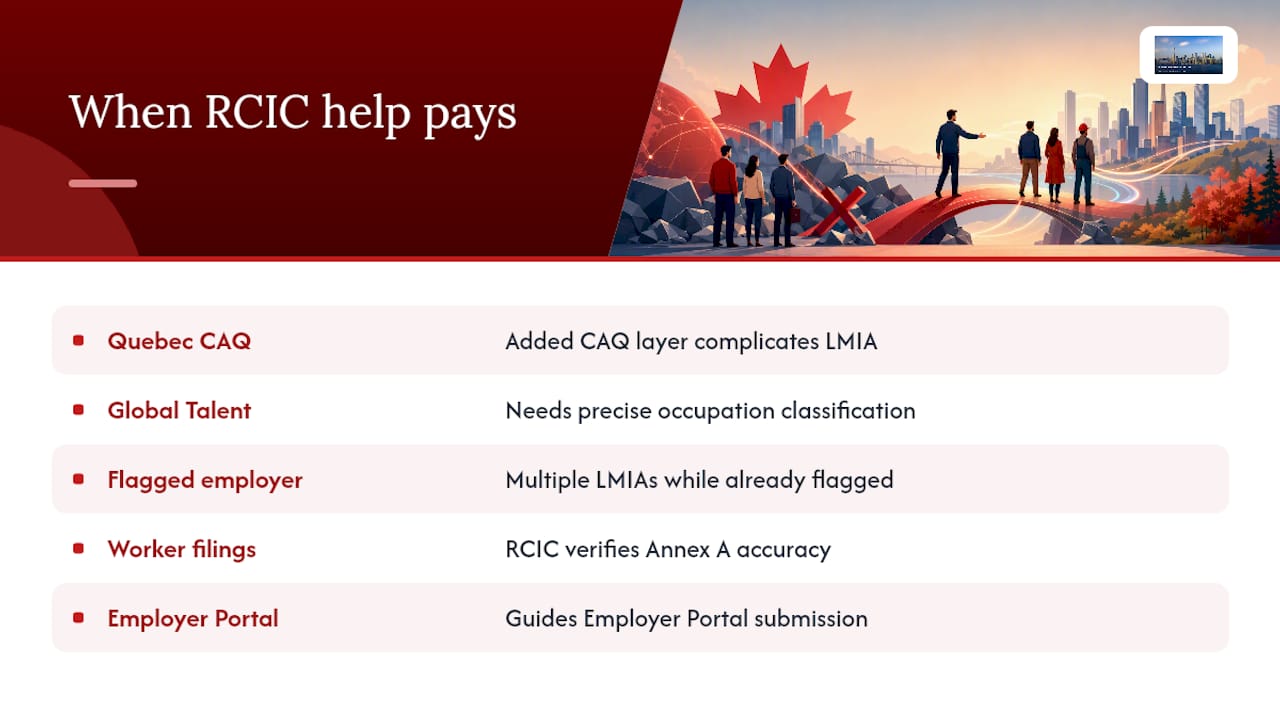
Straightforward, single-hire LMIA files can often move through the standard process without a hitch. Where it gets messy is Quebec’s added CAQ layer, Global Talent Stream filings that hinge on precise occupation classification, or a company juggling multiple LMIA applications while already flagged for recruitment gaps.
That’s where an RCIC-led review earns its cost. A proper LMIA readiness audit checks advertising compliance before ESDC does, builds out the wage and recruitment evidence file, and walks employers through Employer Portal submission line by line. For workers, having someone verify Annex A accuracy before it’s submitted catches errors that would otherwise surface as a refusal months later.
— Micah
How Canada Number One Immigration Supports LMIA Cases
Building a clean LMIA file, or making sure your work permit application matches it exactly, takes more than reading a government checklist once. The firm runs LMIA readiness audits for employers, prepares Annex A and supporting documents for workers, and handles Quebec CAQ coordination so nothing stalls the file at the provincial step.
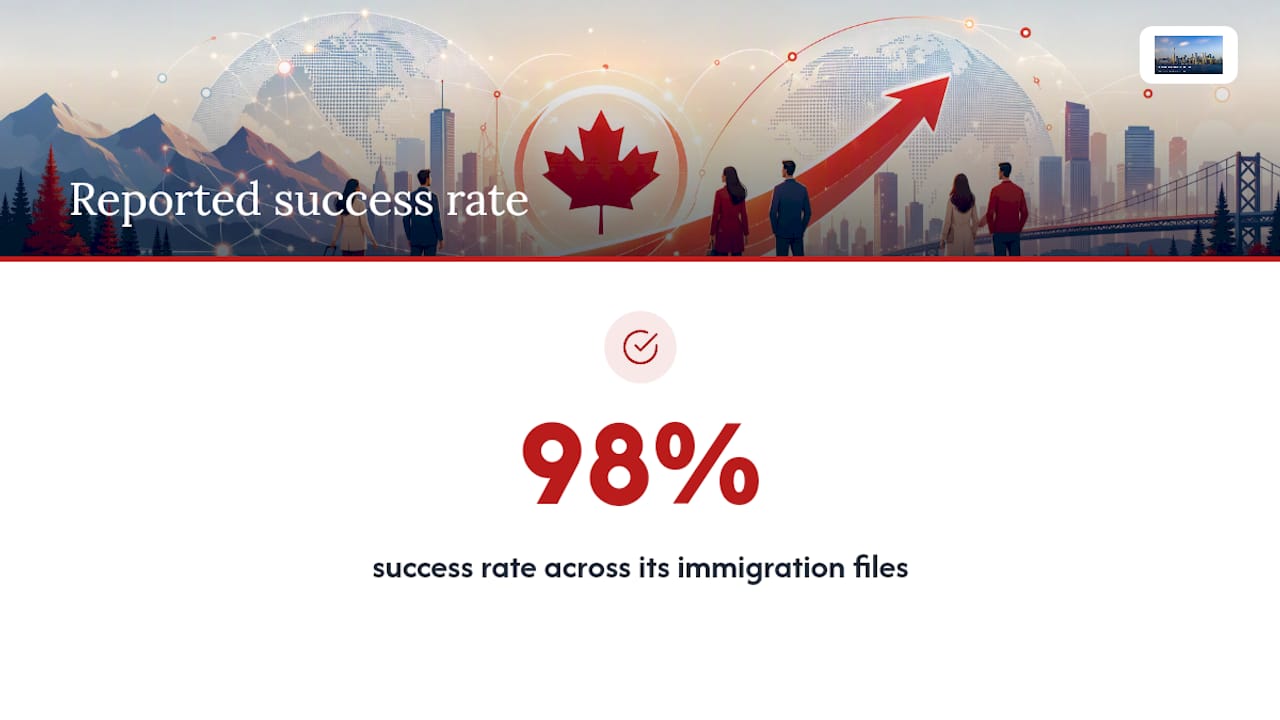
A first engagement typically starts with a document checklist and a realistic timeline estimate, so you know what’s missing before you submit anything to ESDC or IRCC. Led by licensed RCIC Minerva McCoon McBean, the firm reports a 98% success rate across its immigration files. Corporate clients managing multiple hires can also work through a dedicated corporate and contract immigration service built around ongoing LMIA volume rather than one-off applications.
If you’re an employer trying to get a stream selection right, or a worker whose LMIA just came through and needs the work permit filed without errors, book a consultation through Canada Number One Immigration’s work permit services and get a clear next step instead of another government page to decode.
This article is general information, not a substitute for advice from a qualified lawyer. Consult a qualified legal professional about your own circumstances before acting on anything here.
Sources
Recommended
Stay Updated
Subscribe to our newsletter for the latest immigration news and tips.