IMM5708: Change Conditions or Extend Your Stay in Canada
IMM5708 — Application to Change Conditions, Extend My Stay or Remain in Canada as a Visitor

To legally extend your visitor status in Canada, apply for a visitor record through IRCC before your authorized stay expires. That single action, filing IMM 5708 online, keeps you in legal status under what IRCC calls “maintained status” while your application is being processed.
Here is what you need to know immediately:
- File before your authorized-until date. Applying even one day late forces you into a restoration application, which is harder, costlier, and carries a higher refusal risk.
- The form is IMM 5708. Every applicant must complete and sign it. You submit it online through your IRCC account.
- Maintained status kicks in automatically when you apply before expiry. You can legally remain in Canada under the same conditions until IRCC decides.
- Missed the deadline? You have 90 days from the date your status expired to apply for restoration. After that, you must leave Canada.
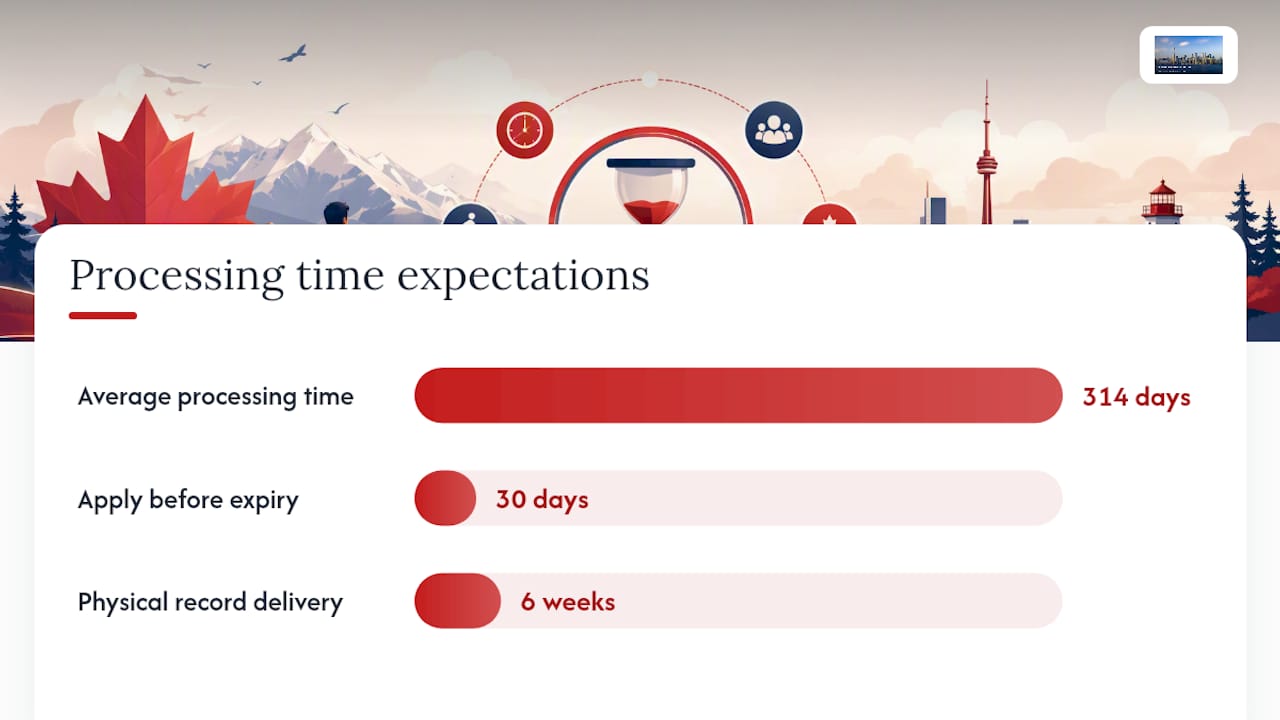
- Processing times are long. Third-party reporting in June 2026 cited IRCC data showing inland visitor-record extensions averaging 314 days for some applicants. File as early as possible.
For complex situations, including restoration cases or prior refusals, Canadanumberoneimmigration (McBean Immigration) offers licensed RCIC-led consulting to guide you through the process.
Key Takeaways
Applying for a visitor record before your authorized-until date is the only way to preserve maintained status and avoid the harder, riskier path of restoration.
| Point | Details |
|---|---|
| File before expiry | Apply at least 30 days before your authorized-until date to trigger maintained status automatically. |
| Use the entry stamp, not the visa sticker | Your authorized-until date is on the port-of-entry stamp; using the visa sticker date is the most common filing mistake. |
| Processing takes much longer than expected | June 2026 reporting cited a 314-day average for some inland cases; file as early as possible. |
| Restoration is your only in-Canada option after expiry | You have 90 days from status expiry to apply; a refused restoration leaves very limited remedies. |
| Canadanumberoneimmigration offers licensed RCIC help | McBean Immigration provides consultation, application preparation, and representation for complex or restoration cases. |
Table of Contents
- What is a visitor record and how does it differ from a visa?
- Who can apply, and when should you file?
- How do you apply online for a visitor record?
- Which forms and documents do you need to include?
- What are the fees and how long does processing take?
- What about special situations: travel, Super Visas, and TRP applicants?
- What if your authorized stay has already expired?
- Common mistakes that cost visitors their status
- When should you hire a licensed RCIC?
- The 30-day rule is already obsolete for most applicants
- Canadanumberoneimmigration: licensed RCIC help when the stakes are high
- Sources
What is a visitor record and how does it differ from a visa?
A visitor record is an IRCC-issued document that extends or changes your conditions while you remain inside Canada. It is not a visa. If you leave Canada while holding only a visitor record, you cannot use it to re-enter. You would need a valid visa or Electronic Travel Authorization (eTA) to come back.
This distinction matters more than most people realize. Many visitors assume their visa sticker is what controls their stay. It does not. The authorized-until date stamped in your passport at the port of entry is the date that governs when you must leave or apply to extend. If no stamp was placed, IRCC defaults to six months from your date of entry.
- Visa sticker: shows when you may seek entry to Canada, not how long you may stay.
- Entry stamp (or port-of-entry notation): shows your authorized-until date. This is the date you must act on.
- Visitor record: the document you receive after a successful extension application; it replaces the entry stamp as your new authorized-until date.
Pro Tip: Before you start your IMM 5708 application, locate the entry-stamp page in your passport and photograph it clearly. You will need to upload a copy, and a blurry scan is one of the most common reasons applications come back incomplete.
Who can apply, and when should you file?
Most visitors in Canada are eligible to apply for a visitor record, including people authorized to be in Canada without a formal work or study permit, and those changing their category to visitor from another status. The key eligibility requirement is that you must still be in valid status when you apply.
The 30-day guideline is the practical floor, not the target. IRCC guidance says to apply at least 30 days before your authorized-until date. Given that inland processing now averages well beyond that window, filing several months early is the smarter move in 2026.
Maintained status: what it gives you and what it does not
When you apply before your authorized-until date, maintained status takes effect automatically. You can legally remain in Canada under the same conditions you entered with. You can continue doing what your original status permitted. What you cannot do is travel outside Canada and return on the visitor record alone.
Maintained status does not expand your rights. If your entry conditions restricted you from working or studying, those restrictions remain in place throughout the processing period. Filing early does not give you new permissions — it preserves the ones you already have.
If you missed the deadline
Restoration of status is available for 90 days after your authorized stay expired. It requires the same IMM 5708 form but with the restoration box checked, plus a written explanation and evidence that you still meet visitor criteria. The process is more expensive, more scrutinized, and refused more often than a timely extension. Temporary Resident Permit (TRP) applicants should also note that TRP applications do not carry maintained status while being processed, so the timing math is different.
How do you apply online for a visitor record?
All visitor record applications must be submitted online through an IRCC account. There is no paper option for most applicants. The online tool generates a personalized document checklist based on your answers, which reduces the chance of submitting an incomplete application.
- Gather your documents first. Passport identity pages, entry-stamp page, proof of funds, and any supporting letters. Have everything scanned at high resolution before you log in.
- Create or sign into your IRCC account at Canada.ca. If you do not have one, registration takes about 10 minutes.
- Select “Visit” and confirm you are in Canada. The tool will build your personalized checklist. Follow it exactly.
- Complete IMM 5708. Enter your reason for extending, planned stay dates, passport details, and entry-stamp information.
- Upload all required documents. Check each file before uploading. Blurry, cut-off, or wrong-format files are a common cause of incomplete decisions.
- Pay the application fee online and submit. Save the acknowledgement of receipt immediately. Screenshot it and store it somewhere you will not lose it.
Pro Tip: An application returned as “incomplete” is legally treated as never having been submitted. If your authorized-until date passes before you resubmit a corrected application, you lose maintained status and must apply for restoration instead. Triple-check every field and every upload before you hit submit.
Which forms and documents do you need to include?
The primary form is IMM 5708. Every applicant must complete and sign their own copy. The form covers your reason for extending, your planned departure date, and your current status details.
Beyond the form itself, your application package should include:
- Passport identity page(s): clear copy of the biographical data page.
- Entry-stamp page: the page showing your authorized-until date. If your passport was renewed after entry, include both the old and new passport identity pages.
- Proof of funds: bank statements, pay stubs, or a sponsor letter showing you can support yourself financially for the extended stay.
- Proof of ties to your home country: property ownership, employment letter, family obligations, or anything that demonstrates you intend to return.
- Letter of explanation: a brief, factual letter stating why you need more time in Canada and your intended departure date.
- Super Visa holders: indicate Super Visa status on the form and include the relevant insurance documentation.
- Study or work permit holders changing to visitor status: include a copy of your current permit and an explanation of the status change.
| Document | Notes |
|---|---|
| IMM 5708 (signed) | One per applicant; date must match submission date |
| Passport identity page | High-resolution scan; both old and new if renewed |
| Entry-stamp page | The authorized-until date page, not the visa sticker |
| Proof of funds | Last 3–6 months of bank statements recommended |
| Ties to home country | Employment letter, property documents, or family evidence |
| Letter of explanation | Factual, concise; state reason and intended departure |
What are the fees and how long does processing take?
The application fee for extending visitor status is set by IRCC and is non-refundable once processing begins. Check the current fee on the IRCC processing times and fees page immediately before you apply, as fees can change.
Processing times are the most important variable in 2026. Third-party reporting in June 2026 cited IRCC data showing inland visitor-record extensions averaging 314 days for some applicants. That is not a typo. A visitor who files 30 days before expiry and then waits 314 days is looking at roughly 10 months of maintained status before a decision arrives.
| Stage | What to expect |
|---|---|
| Acknowledgement of receipt | Arrives by email shortly after submission |
| Application under review | Processing time varies; check IRCC’s published estimates |
| Decision letter | Sent by email or mail when IRCC decides |
| Physical visitor record | Arrives by mail within about 6 weeks of the decision letter |
After you receive a decision letter, IRCC notes that the physical visitor record typically arrives within about six weeks. If it does not, contact IRCC directly. During the entire processing period, your maintained status keeps you legal in Canada as long as you applied before your authorized-until date.
If processing exceeds the published estimate by a significant margin, you can submit a web form inquiry through your IRCC account. Calling IRCC directly is an option but wait times are long.
What about special situations: travel, Super Visas, and TRP applicants?
Several common situations change the rules in ways that catch people off guard.
Leaving Canada while your extension is pending is the most consequential mistake. A visitor record does not function as a re-entry document. If you travel outside Canada while your application is in process, you abandon your maintained status and need a valid visa or eTA to return. If your original visa has expired, you may be unable to re-enter at all. Check your visitor visa and Super Visa options before making any travel plans while an extension is pending.

Super Visa holders have different insurance and documentation requirements. The form asks you to indicate Super Visa status, and you should include current insurance documentation with your package.
Study or work permit holders changing to visitor status need to document the status change clearly. Include a copy of your expiring or expired permit and a letter explaining why you are transitioning to visitor status. The officer will want to see that you are not trying to extend work or study rights through a visitor record.
TRP applicants: maintained status does not apply to you. If you are applying for a Temporary Resident Permit while your visitor status has expired, you do not benefit from maintained status during TRP processing. Plan your travel and status expectations accordingly, and consider getting licensed counsel before filing.
If your work or study conditions changed before you applied for a visitor record, that history can raise questions about your intent. A prior refusal or a gap in status makes the application more complex and increases the value of professional review before submission.
What if your authorized stay has already expired?
If your status has already lapsed, you have one option inside Canada: restoration of status. The window is 90 days from the date your authorized stay expired. After that, you are required to leave Canada, and staying longer can result in inadmissibility findings that affect future applications.
- Confirm the exact date your status expired. Calculate from your entry-stamp authorized-until date, not your visa sticker.
- Gather your restoration package. You need IMM 5708 with the restoration box checked, a written explanation of why your status lapsed, evidence you still meet visitor criteria (funds, ties, intent to leave), and any supporting documents.
- Pay the restoration fee in addition to the extension fee. Both are non-refundable.
- Submit online through your IRCC account. Keep every confirmation and receipt.
A refused restoration leaves very limited options. If IRCC refuses your restoration application, you are generally required to leave Canada. There is no appeal mechanism for visitor-status restoration refusals in the way that exists for some other application types. Acting quickly and getting the application right the first time is not optional — it is the only real chance you have.
If you are in this situation, contact a licensed RCIC before filing. The cost of professional help is far lower than the cost of a refused application and the inadmissibility risk that can follow.
Common mistakes that cost visitors their status
Most status losses are preventable. The errors that cause them are almost always the same.
- Using the visa sticker expiry instead of the entry-stamp date. The authorized-until date on your entry stamp is what controls your deadline. Misreading this is the single most common mistake.
- Submitting an incomplete application. An incomplete return is treated as if you never applied. If your authorized-until date passes before you resubmit, you need restoration.
- Uploading poor-quality scans. A blurry passport page or a cut-off entry stamp gives IRCC grounds to return the application.
- Waiting until 30 days before expiry in a high-backlog period. With processing times now running close to a year for some inland cases, 30 days is the legal minimum, not a comfortable buffer.
- Leaving Canada while an extension is pending. This abandons maintained status and may strand you outside Canada without a valid visa to return.
Pro Tip: If your case involves a prior refusal, a gap in status, or a change from work or study conditions, file earlier than you think you need to and seriously consider hiring a licensed RCIC. The revised visitor visa guidelines have tightened scrutiny on repeat extensions, and a well-documented application makes a measurable difference.
When should you hire a licensed RCIC?
Most straightforward extension applications can be completed without professional help if you follow the IRCC checklist carefully. But several situations genuinely benefit from a licensed Regulated Canadian Immigration Consultant (RCIC).
- Restoration applications. The stakes are higher, the documentation requirements are more demanding, and a refused restoration has serious consequences.
- Prior refusals. Any previous refusal on a Canadian immigration application raises the scrutiny on your current one.
- Complex travel or document situations. Expired passports, multiple nationalities, gaps in travel history, or inconsistencies in your record.
- Status changes from work or study. Transitioning from a work or study permit to visitor status involves documentation that officers examine closely.
- Inability to assemble convincing evidence quickly. If your proof of funds or ties to your home country is thin, a consultant can help you identify and present what you have most effectively.
Canadanumberoneimmigration (McBean Immigration) offers licensed RCIC-led services covering case assessment, document checklist preparation, form completion, application review, submission support, and follow-up with IRCC. Minerva McCoon McBean holds RCIC designation and leads the firm’s consulting work. For readers who need representation for a restoration application or have a complex evidence situation, a paid consultation is the practical next step.
The 30-day rule is already obsolete for most applicants
The standard advice on extending visitor status has not caught up to the reality of 2026 IRCC processing. Every guide tells you to apply 30 days before your authorized-until date. That was reasonable when processing took weeks. With inland visitor-record extensions now averaging close to a year for some applicants, filing 30 days out means spending most of your extended stay in a processing limbo where you cannot travel, cannot change your plans, and are entirely dependent on IRCC’s timeline.
The smarter move is to treat the 30-day rule as the legal floor and file as early as your long-term Canadian citizenship benefits situation allows. If you know you want to stay longer, apply the moment that becomes clear, not when the clock forces you to. The maintained-status protection kicks in either way, but filing early gives you options. Filing late takes them away.
The other thing most guides understate is the cost of an incomplete application. IRCC does not send you a warning and a chance to fix it before your status expires. The application comes back, your status may lapse in the meantime, and now you need restoration. That outcome is entirely avoidable with careful preparation, and it is the main reason a licensed RCIC adds real value even for cases that look simple on the surface.
Canadanumberoneimmigration: licensed RCIC help when the stakes are high
Visitor-status extensions look straightforward until something goes wrong. A missed deadline, a returned incomplete application, or a prior refusal can turn a routine filing into a restoration case with real inadmissibility risk.
For visitors who need restoration help, have complex documentation situations, or simply want a professional to review their application before submission, the firm offers paid consultations and full application support. You get a case assessment, a complete document checklist, form preparation, and follow-up with IRCC. No guessing about whether your package is complete.
Review the firm’s full immigration consulting services or check consulting fees to understand what a paid engagement covers. If your authorized-until date is approaching or has already passed, book a consultation now rather than filing alone and hoping for the best.
This article is general information, not a substitute for advice from a qualified lawyer. Consult a qualified legal professional about your own circumstances before acting on anything here.
Sources
IRCC updates its forms, fees, and guidance periodically. Check these pages immediately before submitting your application.
Forms and fees can change without much notice. Verifying the current IMM 5708 version and fee amount on the day you apply takes two minutes and protects you from submitting an outdated form.
Recommended
Stay Updated
Subscribe to our newsletter for the latest immigration news and tips.